What is Cedar Fever?
Understanding mountain cedar allergies in Central Texas
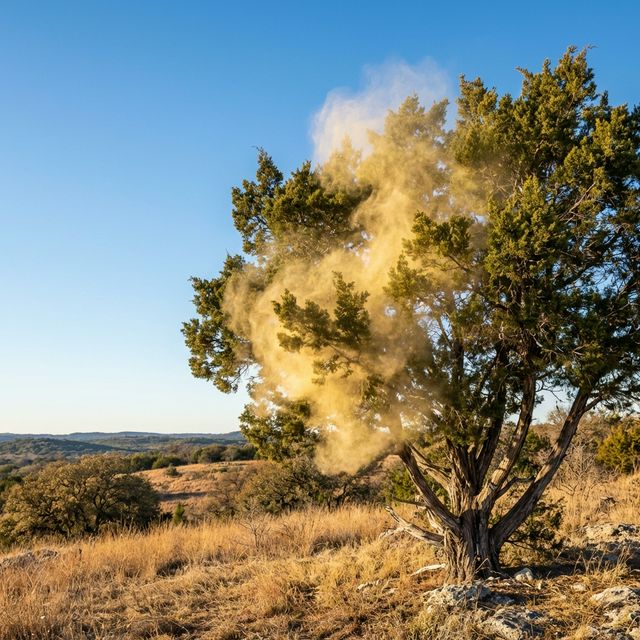
About Mountain Cedar
"Cedar fever" is the colloquial name for the allergic reaction caused by Ashe Juniper (Juniperus ashei) pollen. Despite the name, it's not caused by true cedar — it's a juniper species native to the Texas Hill Country.
Central Texas is one of the worst places in the world for cedar allergies. Austin sits directly downwind of the Hill Country, where millions of Ashe Juniper trees release enormous quantities of pollen during winter months.
Pollen counts in Austin regularly surge past 5,000 grains/m³ during peak periods, with some days exceeding 8,000–10,000 grains/m³. For context, most allergy sufferers begin experiencing symptoms at just 50 grains/m³.
Why Austin Is a Hotspot
Geographic Position
Austin sits at the eastern edge of the Hill Country, directly in the pollen drift path from millions of juniper trees.
Cold Front Triggers
Winter cold fronts cause male juniper trees to release massive clouds of pollen simultaneously, creating sudden spikes.
Population Growth
Many Austin transplants develop cedar allergies after 1–3 years of exposure. The immune system becomes sensitized over time.
Drought Resistance
Ashe Juniper thrives in Texas drought conditions. While other vegetation declines, juniper populations continue expanding.
Seasonal Timeline
October – November
Early cedar pollen release begins. Counts usually under 100 grains/m³.
December
Season accelerates. Cold fronts trigger pollen bursts. Counts can spike to 1,000+.
January
Peak season. Counts regularly exceed 2,000–8,000+ grains/m³ in Austin.
February
Gradually declining but still significant. Late cold fronts cause final spikes.
March
Cedar season ends. Oak pollen begins its peak.
Severity Scale Guide
Pollen counts measured in grains per cubic meter (grains/m³)